


Rachel Crick recently spoke with Sierra Davey, senior event manager at MCI USA, on the challenges of ageism for young professionals and the value Gen Z employees bring to the workplace.
Sierra Davey attended Longwood University and Penn State University and obtained degrees in mathematics and education before she pivoted to meeting planning when she got a job at an education research technology firm. Davey now works as a senior event manager for MCI USA, a global marketing agency that hired her in 2020. She is a member of PCMA’s 20 in Their Twenties, Class of 2025.
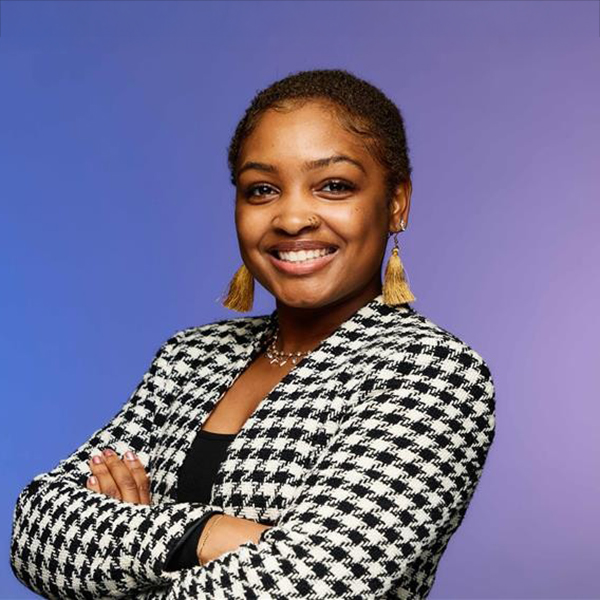
Sierra Davey
Can you tell me about some of the observations you’ve made on ageism in the workplace?
My perspective on ageism is from a younger person’s perspective. Ageism against older people is definitely real, but I see it playing out in the opposite way. Just being younger and newer at something, a lot of times you get overlooked, and you get dismissed very easily, even though you might have the education or the experience. A lot of times people defer to older people in the room and think they’re always the ones who are in charge and have the knowledge and the authority. You can see it as vendors come into the room when we’re on-site, and they’re looking at the team of us standing around in the staff office and trying to figure out who to direct their questions to. And, usually, I’m the last person that they look at, even though I’m the planner, and I have the keys, so to speak. I think a lot of times younger people are getting overlooked because they are younger. Because of that, opportunities are being given to older people due to their age.

What would you say are the negative consequences for that ageism?
I think a lot of times that discourages people from wanting to continue with a company because they’re wanting to grow. So, ultimately, you’re not investing in the future. Maybe younger generations are looking for jobs elsewhere because they don’t feel like the industry or the specific company is a place where they can learn and make those mistakes that you make early in your career and grow through them. It’s expected that you’re supposed to jump in and know everything. And, if you don’t, then it’s almost like you’re being punished more because you don’t have that same knowledge. So it’s very discouraging, I think, for younger generations. And then it just crumples the company because then you’re unbalanced. You’ve got a lot more people who are close to retiring and no one to fill those roles when they become available.
How do you think it could be lessened or prevented?
Having more intergenerational teams is a great solution. There are eight of us on the planning team, and we span all the generations, from Gen Z through boomers and Gen X. It’s all the generations, and we work so amazingly well together. We always say they should do a case study on us because we span 40 or 50 years, and it’s just a really well-functioning team. I think that is a really easy way to get all those different perspectives, especially from the younger generations. So many of our attendees who are starting to attend these conferences are Gen Z; Gen Z is much older than we realize. Not embracing those perspectives is just leaving holes for not being inclusive in your planning and your execution.
Because Gen Z is starting to attend events, can you talk about how generational inclusivity ties into making sure events are inclusive?
From the attendee perspective, there’s a certain expectation when you attend a conference of what it’s going to be like. Obviously, that expectation varies across different people from different regions and cultures and industries. But I think we see a lot of conferences that you can tell are not up-to-date with the times. They’re not as innovative. They’re not really modernizing. They’re not keeping up with new technology that’s coming out and catering to that audience that leans so much into the digital age. It affects attendance numbers. Again, you’re almost alienating a whole generation of attendees because when they attend your conferences, and they’re looking for these certain things that they’re used to having in their daily life, it doesn’t make them feel like this is a place where they can find people to network with. The education might be amazing, but what I find is that it always boils down to the networking, the people you meet, the connections and the relationships. If you don’t get that from an event, then it’s really discouraging to even want to attend it again. I think that’s very reflective of how we plan things and how we try and cater to different generations and what they are used to in their daily lives.
What are some practical tips you have for other planners your age who are in this industry for improving the inclusivity of their events?
I would definitely recommend thinking about inclusion in all aspects, not just how you can be more inclusive in your registration system, but also how we can be more inclusive in our language, like in emails that we send or in announcements that are made on stage. You can also think about your speakers; I work with a lot of speakers for some of my different clients, and speaker diversity is a big reflection of how inclusive an event is. It’s hard because, with speakers, sometimes it feels like beggars can’t be choosers. You’re always looking for more speakers at your events, and sometimes, if you don’t have a lot of people who are interested in getting up on stage, then you might end up with a lack of inclusion in your speakers. But one of my clients is very intentional about going out to sponsors or whenever they’re making a request to a speaker agency. They very clearly state they need to have a variety of speakers on stage at their events because that reflects to the audience how inclusive they are.