

Business Meets Bayou
Courtesy Visit Baton Rouge
Baton Rouge at a Glance
Location: South Louisiana
Access: Baton Rouge Metropolitan Airport, Louis Armstrong New Orleans International Airport, Interstates 10 and 12
Hotel Rooms: 8,800
Contact Info:
Visit Baton Rouge
225-383-1825
visitbatonrouge.com
Raising Cane’s River Center
Built: 1977, renovated 2011
Exhibit Space: 70,000 square feet
Other Meeting Spaces: 17 breakout rooms, ballroom, over 200,000 square feet of total space
Meeting Hotels
Crowne Plaza Executive Center Baton Rouge
Guest rooms: 294
Meeting Space: 32,000 square feet
Baton Rouge Marriott
Guest rooms: 299
Meeting Space: 17,879 square feet
Who’s Meeting in Baton Rouge
Louisiana State Beta Club
Attendees: 7,500
National Association for College Admission Counseling
Attendees: 2,500
Louisiana Association of Computer Using Educators
Attendees: 1,500
Groups have been meeting on the banks of the lower Mississippi River long before Europeans arrived on the scene; the Houma and Bayougoula tribes marked the boundary between their hunting grounds with a red-stained cypress pole adorned with fish and bear parts. When French explorer Pierre Le Moyne d’Iberville encountered the landmark in 1699, his party called it “le bâton rouge,” or “red stick,” giving name to Louisiana’s future capital.

More than three centuries later, Baton Rouge continues to bring people together. The city combines modern convention facilities with historic architecture, Cajun and Creole traditions, a vibrant college-town atmosphere and a thriving culinary scene.
“Baton Rouge is an authentic city that allows folks to experience a little bit of the entire state,” said Geraldine Bordelon, senior vice president of destination sales for Visit Baton Rouge. “We have history, sports, great food and a new film trail. Baton Rouge is just a great destination for state, regional or national meetings. We’re a big city that feels like a small town, and we also have very affordable pricing.”
Destination Highlights
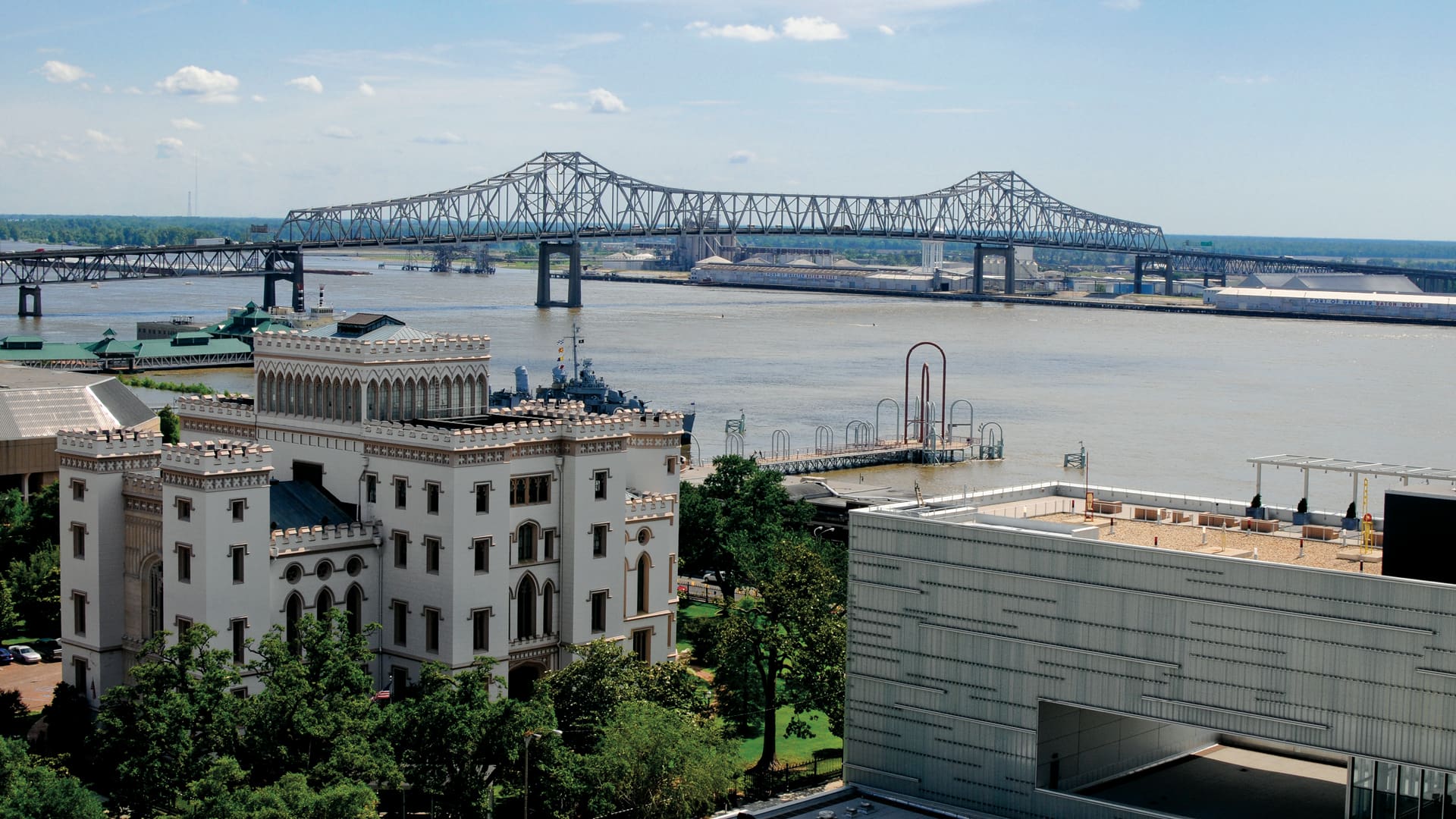
Perched above the river, the Gothic Revival Old State Capitol resembles a medieval castle. Completed in 1852, the landmark survived the Civil War and a devastating fire before being restored as a museum of political history. Inside, visitors encounter a swirling cast-iron staircase, a stunning stained-glass dome and exhibits that highlight the state’s (often turbulent) past. Guided tours are available for groups of up to 100.
The current Louisiana State Capitol is an Art Deco skyscraper championed by legendary governor Huey P. Long. Completed in 1932 and located just a few blocks from the original, the 34-story, 450-foot tower is the nation’s tallest state capitol. Bronze doors depict scenes from Louisiana’s past, while elaborate murals and sculptures adorn Memorial Hall. The exterior features carved portraits of historical figures and reliefs depicting Louisiana’s agricultural and industrial heritage, while the gardens provide a landscaped respite from downtown.
Housed in a historic railroad depot, the Louisiana Art & Science Museum combines changing art exhibitions with scientific discoveries. Highlights include a 2,300-year-old Egyptian mummy, a Triceratops skull and the Irene W. Pennington Planetarium. The museum also offers facility rentals, including an atrium for receptions and buffet dinners along with an auditorium and private planetarium showings.
Distinctive Venues
The Capitol Park Museum provides a colorful backdrop for receptions and special events. Its multipurpose banquet room can accommodate 400 guests for a reception or 200 for a seated dinner, while the lobby holds 350 for a reception. An outdoor plaza offers additional entertaining space for 500 reception guests or 300 seated diners. The museum’s exhibits explore Louisiana’s maritime and agricultural heritage, music and Mardi Gras traditions, with displays including a 48-foot shrimp trawler and a two-row carnival float.
In Mid City, Red Stick Social occupies a century-old former electric power plant in the Electric Depot development. The five-level entertainment complex accommodates more than 600 guests and includes a restaurant, two bars, a rooftop lounge, a live music venue and Brunswick bowling alleys. Four lanes on its private-event level can be incorporated into company gatherings, while karaoke, trivia and games provide opportunities for team building.
The Tunnel at the historic Hilton Baton Rouge Capitol Center offers a more intimate setting with brick walls, leather furnishings and Roaring Twenties-inspired decor. The atmospheric space accommodates receptions of up to 50 guests or multicourse dinners for 20, served on fine china and crystal.

Major Meeting Spaces
Downtown, the Raising Cane’s River Center anchors the convention district with a 70,000 square-foot exhibition hall, a 26,000-square-foot divisible ballroom and 17 meeting rooms. Its Riverview Room overlooks the Mississippi, while nearby attractions like the planetarium and the Old State Capitol give attendees lots to explore. An adjacent 1,800-seat performing arts theater and 10,000-seat arena are included in the convention center’s offerings.
Baton Rouge is home to Louisiana State University and Southern University, whose athletic programs inspire fierce loyalty. At LSU, Tiger Stadium holds more than 100,000 football fans, while the campus offers museums, historic buildings and cultural attractions. Near LSU, the Crowne Plaza Executive Center has more than 32,000 square feet of meeting space, including the Premier Ballroom, which can host up to 2,000 people in a theater-style configuration or 1,300 for a seated banquet.
Overlooking the mighty Mississippi, the event center at L’Auberge Casino Hotel Baton Rouge can seat up to 1,600 and accommodate 800 for standing cocktail receptions. The outdoor festival grounds have a capacity of 2,500 guests.
After the Meeting
Baton Rouge offers opportunities to experience the area’s history and traditions beyond the downtown convention district. The LSU Rural Life Museum preserves 32 historic buildings on 25 acres, illuminating the lives of 18th- and 19th-century Louisianans through architecture, agricultural tools and humble household goods. Guided tours are available with reservations. The adjacent Windrush Gardens features 25 acres of winding paths, centuries-old live oaks, crepe myrtles, azaleas and camellias. Inspired by European estates, Windrush boasts fountains, sculptures and intimate garden rooms and is available for private events.
For a taste of the region’s sugarcane heritage, Oxbow Rum Distillery offers tours and tastings at its downtown facility. The family-owned operation grows its own sugarcane, mills it and distills the resulting spirits, following the process from field to glass. A tasting room, outdoor patio and private event space provide additional options for gatherings.
BRQ Seafood and Barbeque serves Louisiana-inspired seafood and smoked meats, with an outdoor entertaining area called The Backyard that accommodates up to 250 guests. The space features a full bar, lounge and table seating, televisions and shaded areas. Bordelon also recommended Mike Anderson’s Seafood, which was established in 1975 by a former All-American Linebacker at LSU and can accommodate groups of up to 100.
“It’s an iconic venue for seafood,” she said. “And when people come to Louisiana, they come for seafood.”
Atop the Shaw Center for the Arts, Tsunami Sushi hosts private parties and corporate events, offering Asian-inspired cuisine and a 4,000-square-foot open-air terrace overlooking the Mississippi River. The center also houses the Manship Theatre, which presents concerts, comedy, dance and film screenings.

Cynthia Barnes
Cynthia Barnes is a Colorado-based travel writer who has written for the Boston Globe, Food & Wine, Toronto Star, and National Geographic, among other publications. She loves dives (both scuba and bars), baseball (Cubs), spicy food, and exploring the world.
You May Also Like



About Us

We're Small Market Meetings, America's leading experts on planning meetings in smaller destinations. Find lots of articles and other free resources for growing in your career here.
The Latest Issue
Stay Connected!
Get the Meetings at a Glance e-newsletter twice a month.