


Rachel Crick recently spoke with Sydney Lowe, the senior manager of events at Heartland Forward, about the pros and cons of nontraditional career paths.
Sydney Lowe followed a nonlinear path into the events industry, first moving to Hawaii to work as a travel coordinator after graduating high school. She had several event and wedding planning apprenticeships in Manhattan before landing an event management role at Bentonville-based Heartland Forward, where she was later promoted to senior manager of events. She attended Arkansas State University from 2022–2025 to obtain a degree in communications while working full-time. She also studied hospitality at New York Institute of Technology during her time in New York and is a member of PCMA’s 20 in Their Twenties, Class of 2026.
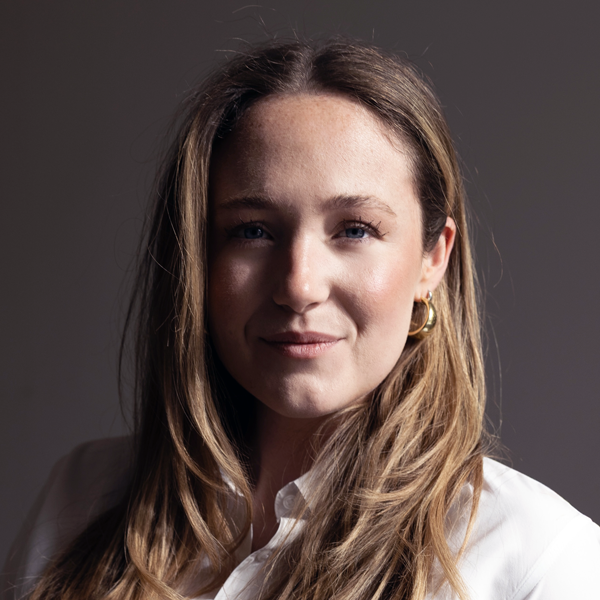
Sydney Lowe
When you’re talking about nontraditional pathways to success, what does that mean to you?
A: To me, I’d say nontraditional pathways are paths that aren’t linear. That can look like so many different things — career pivots, time away from school, travel, even learning through hands-on experience, trades, all those things. And then, within the events industry, I think it matters because it changes who we see as capable and who we invite into the room for gathering. So lived experience, I find, often brings as much insight — if not more — than a title or credential.

At what point did you realize that less traditional pathways were assets, not liabilities?
A: It wasn’t until I started working full-time that I saw that the skills I built doing travel, logistics, hospitality to some degree and then bartending were not details or detours, but they were more of the true foundation that I actually needed. And I didn’t realize I needed them at the time. It made me a lot more confident in designing rooms differently. I don’t automatically assume the best voice is the one with the most polished resume, but instead I look for things like perspective, curiosity, truly lived experience and adaptability. I think people who’ve taken nontraditional paths are often stronger at reading a room and handling pressure and connecting across differences.
We discussed how that can bring about lots of contrast within events. Why is that contrast valuable instead of something to just ignore or sweep under the rug?
A: The value is that it makes the conversation real. I think when you elevate voices that aren’t just usual titles, you get insight that’s grounded in lived experience, not just theory. I think the best conversations have contrast. If everyone in the room thinks the same way, the conversation tends to stay comfortable. But if it does that, it doesn’t move forward. For example, at the Heartland Summit, which is Heartland Forward’s flagship event, we invite people, and our tagline is “Meet in the middle.” And that phrase has a few different meanings. One is quite literal; we gather in the middle of the country in Bentonville, Arkansas. But it also speaks to that contrast, where it also means creating space for people with different backgrounds and viepoints, where they can come together and truly learn from one another. And I think when that’s designed well, it doesn’t create division; it actually creates more of an honest, dynamic conversation where ideas move forward.
When it comes to event design, what’s one small change that can make a difference in how inclusive a gathering feels, or how much contrast it has, to use your word?
A: One small design change that we are using at Heartland Summit is creating smaller curated spaces within a larger convening where people can contribute to lived experiences. So, specifically at the Heartland Summit, we do this through what we call “salon-style dinners.” Each dinner is centered around a specific topic, and guests can join a conversation where they have true, real perspective that they can bring. At Heartland Summit this past year, in 2025, we had 11 dinners happening simultaneously. And, because we bring together 350 guests total, it gave a chance for these smaller dinners based on what and where people are coming from. I think the dialogue gets more honest, and the connections tend to last well beyond the event when you make it really curated. Another thing is speakers. We’ve had amazing speakers with incredible titles, but it’s always so intriguing to me to hear where they started.
Is there anything else more broadly that you can recommend to other planners who are attempting to design events that are inclusive to those who followed nontraditional paths?
A: If I could leave one little piece of advice, I would say before you design the format or build the agenda or finalize any invite lists, one thing to do is to get crystal clear on what you want the guests to leave with. I don’t mean anything tangible or a gift, but rather, what do you want people to walk away having learned, felt or gained? So, if the goal of the convening is to experience stronger connections and ensure that your guests feel that, then you need to lean more into intentional guest experience, such as studying the guest list, understanding people’s backgrounds and being really thoughtful about who should meet, and then connecting those people. Or if the goal is stronger content, then design for the audience specifically in the room and understand what sectors are represented and then build those sessions on what actually matters to the folks in the room, not what looks good on paper.